
If your joints have been talking to you a little more than usual lately — that stiff-getting-out-of-bed feeling, the achy knees on stairs, the puffiness in your fingers by evening — you’re not imagining it, and you’re definitely not alone.
Somewhere between our 40s and 50s, inflammation starts showing up uninvited, and one of the biggest (and most overlooked) levers we have to quiet it down is sitting right there on our plates: fiber.
Fiber doesn’t get nearly the credit it deserves in the joint pain and inflammation conversation. We hear a lot about turmeric, omega-3s, and cutting sugar — all valid — but fiber is the quiet workhorse that feeds your gut microbiome, and a happy gut microbiome produces fewer inflammatory compounds that travel through your bloodstream and settle right into your joints. Gut health and joint health are far more connected than most of us were ever taught.
The good news? Eating for inflammation doesn’t mean bland, boring, or bland (yes, I said it twice — it’s that important to me that you know this isn’t a diet of steamed broccoli and sad chicken breast). Whether your joint discomfort comes from aging, osteoarthritis, or general inflammation.. Below are seven genuinely flavorful, fiber-forward meals that support your body’s natural anti-inflammatory processes, ease joint pain over time, and actually taste like something you’d want to eat again tomorrow.
Why Fiber Matters for Inflammation and Joint Pain
Before we get to the meals, let’s talk quickly about why this works, because I always want you to understand the “why” behind what you’re eating — not just follow instructions blindly.
- Fiber feeds beneficial gut bacteria, which produce short-chain fatty acids like butyrate — compounds shown to help regulate inflammatory responses in the body
- A fiber-rich diet supports healthy digestion, reducing the gut permeability (“leaky gut”) that’s linked to systemic inflammation and joint discomfort
- High-fiber foods help stabilize blood sugar, and blood sugar spikes are a known trigger for inflammatory flare-ups
- Fiber supports a healthy weight, which matters because extra weight puts direct mechanical stress on weight-bearing joints like knees and hips
Most women I work with are surprised to learn they’re only getting 12–15 grams of fiber a day when the target for reducing inflammation and easing joint pain is closer to 25–30 grams. The meals below are designed to close that gap deliciously. Many of these meals are inspired by the Mediterranean diet, one of the most researched eating patterns for reducing chronic inflammation.
A quick note before we dive in: If you’re looking for a natural way to support your joints, you’re in the right place. The meal ideas in this article are based on nutrition research exploring the connection between fiber, gut health, and inflammation. While everyone’s body is different, these meals are designed to help you nourish your body with foods that support overall joint health and healthy inflammatory balance.
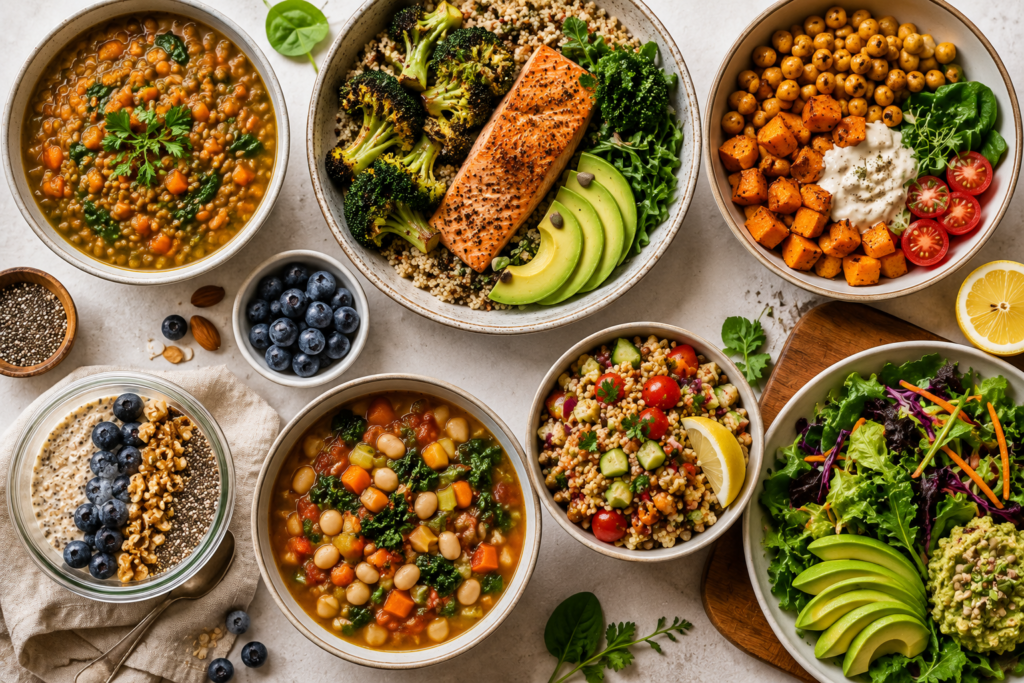
7 Flavorful Fiber Meals That Calm Inflammation
1. Turmeric-Ginger Lentil Soup
Lentils are one of the highest-fiber foods you can eat (about 15g per cup), and this soup pairs them with turmeric and ginger — two of the most researched anti-inflammatory spices out there. Simmer red lentils with diced onion, garlic, fresh ginger, turmeric, and a splash of coconut milk for warmth and depth.
- Add a squeeze of lemon at the end to brighten the flavor and boost iron absorption
- Batch-cook and freeze in portions for easy lunches during flare-up weeks
2. Roasted Salmon Bowl with Quinoa and Charred Broccoli
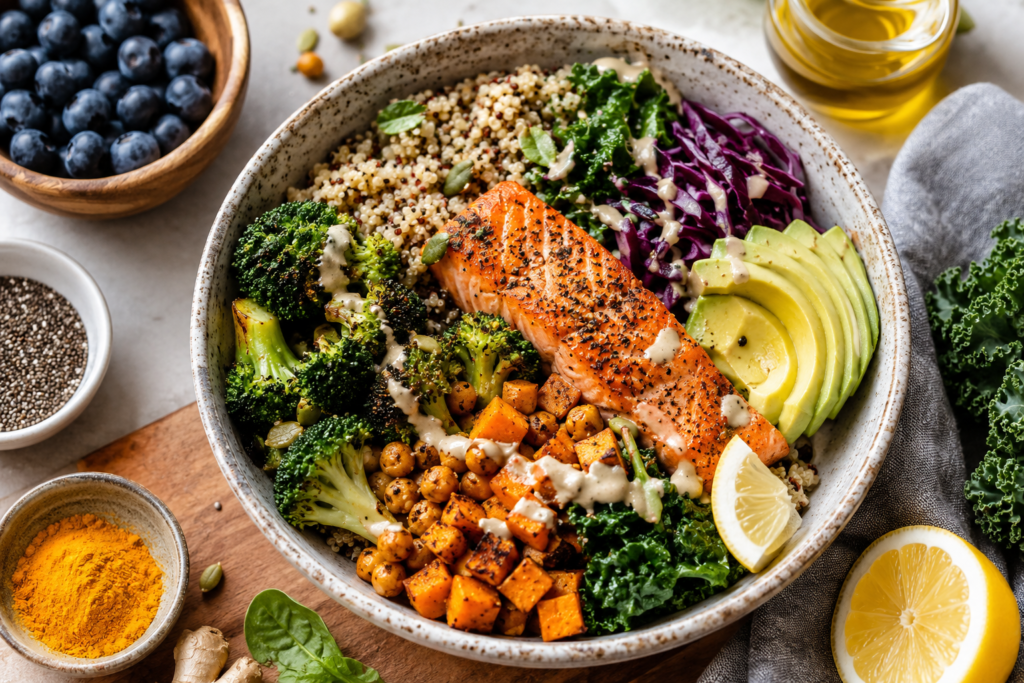
This one covers two bases at once: omega-3s from the salmon to help calm joint inflammation, and fiber from quinoa and broccoli to support your gut. Roast broccoli until the edges char slightly (that caramelization is where the flavor lives), then layer over quinoa with flaked salmon, avocado, and a tahini-lemon drizzle.
- Swap quinoa for farro or brown rice if you want variety through the week
- The tahini dressing adds healthy fats that help your body absorb the fat-soluble anti-inflammatory compounds in the vegetables
3. Chickpea and Roasted Vegetable Buddha Bowl
Chickpeas bring nearly 13g of fiber per cup and a satisfying, hearty texture that keeps you full for hours. Roast chickpeas with smoked paprika and cumin until crisp, then build your bowl with roasted sweet potato, sautéed spinach, and a garlicky yogurt sauce.
- Sweet potatoes provide beta-carotene, which has antioxidant properties that support the body’s inflammatory response
- This bowl reheats beautifully, making it a smart make-ahead lunch option
4. Wild Blueberry and Chia Overnight Oats
Breakfast matters more than most of us give it credit for when it comes to managing inflammation and joint pain. Oats alone offer about 4g of fiber per serving, and adding chia seeds nearly doubles that while contributing plant-based omega-3s. Wild blueberries bring anthocyanins, compounds tied to reduced inflammatory markers.
- Prep five jars on Sunday for grab-and-go mornings all week
- Add a spoonful of ground flaxseed for an extra fiber and omega-3 boost
5. Anti-Inflammatory Veggie and White Bean Stew
Think of this as a cozy, one-pot answer to joint stiffness on cooler days. White beans deliver both fiber and plant protein, while a generous mix of carrots, celery, kale, and diced tomatoes rounds out the antioxidant profile. Season with rosemary and a bit of black pepper, which actually helps your body absorb curcumin if you stir in a bit of turmeric too.
- This stew tastes even better the next day, so don’t be afraid to make a big batch
- Kale holds up well to reheating, unlike more delicate greens like spinach
6. Grilled Chicken and Roasted Beet Salad with Walnuts
Beets are having a moment in the anti-inflammatory world, and for good reason — they’re rich in betalains, plant compounds associated with reduced inflammatory activity. Pair roasted beets with grilled chicken, a handful of walnuts (hello, more omega-3s), arugula, and a simple olive oil vinaigrette.
- Arugula and other leafy greens add fiber without weighing down the meal
- Walnuts provide healthy fat that helps your body absorb fat-soluble nutrients from the beets and greens
7. Black Bean and Sweet Potato Tacos
Yes, tacos can absolutely be part of an anti-inflammatory, joint-friendly way of eating. Black beans deliver around 15g of fiber per cup, and roasted sweet potato brings natural sweetness that balances a bit of smoky chili seasoning. Load into corn tortillas with shredded cabbage (a fiber and gut-health bonus) and a dollop of avocado crema.
- Cabbage slaw adds crunch and prebiotic fiber that feeds beneficial gut bacteria
- These come together in under 30 minutes, making them realistic for a weeknight

Simple Ways to Add More Fiber Without Overhauling Your Whole Diet
If seven new recipes feel like a lot at once, start smaller. Small, consistent shifts are what actually stick.
- Add a tablespoon of chia or ground flaxseed to your morning oats, smoothie, or yogurt
- Swap white rice or pasta for a whole grain like quinoa, farro, or brown rice a few times a week
- Keep a can of chickpeas or black beans on hand to toss into salads, soups, or bowls
- Leave the skin on potatoes, apples, and cucumbers, since much of the fiber lives there
- Build meals around vegetables first, then add your protein and grains around them
One of the biggest mistakes I see is women trying to overhaul everything overnight. They clean out the pantry, buy dozens of new ingredients, and expect perfection by Monday. It’s exhausting—and it rarely lasts. That’s exactly why I designed the meal plans inside my 21-Day Anti-Inflammatory Reset to focus on simple, realistic changes that build on each other, so healthy eating feels doable instead of overwhelming.
The Bigger Picture: Food Is One Piece of Joint Health
Nutrition plays an important role, but it’s only one part of supporting healthy joints.
Many women juggling careers, family, and personal responsibilities experience chronic stress, poor sleep, and long hours of sitting. All of these factors may influence how the body feels day to day.
For the best results, combine nutritious meals with healthy lifestyle habits such as:
- Regular walking or strength training
- Gentle stretching or mobility work
- Quality sleep
- Stress management practices
- Staying hydrated
- Following your healthcare provider’s recommendations for ongoing joint concerns
Rather than chasing quick fixes, aim to build routines that feel realistic and enjoyable.
Frequently Asked Questions
Can eating more fiber really help with joint pain?
Fiber supports a healthy gut microbiome, which plays an important role in regulating the body’s inflammatory response. While it won’t cure joint pain, eating more fiber-rich foods consistently may help support overall joint health as part of a balanced lifestyle.
How much fiber should women over 40 eat?
Most women should aim for about 25 grams of fiber per day. Many women consume significantly less, so gradually increasing your intake through whole foods is often a practical approach.
What’s the best diet for inflammation?
Many experts recommend a Mediterranean-style eating pattern because it’s rich in vegetables, legumes, whole grains, healthy fats, and seafood—all foods associated with supporting overall health and helping manage inflammation.
Your Next Step Toward Fewer Flare-Ups and More Freedom in Your Joints
Here’s the truth: knowing which foods calm inflammation is one thing. Actually building a realistic, week-by-week rhythm around them — without spending hours meal planning or guessing whether you’re getting enough fiber — is another thing entirely.
That’s exactly why I created the 21-Day Anti-Inflammatory Reset, a simple, done-for-you program built specifically for women over 40 who are ready to ease joint pain, reduce inflammation, and feel steadier in their bodies again. It includes a full 21-day roadmap, complete meal plans, weekly grocery lists, and bonus resources designed to take the guesswork out of eating this way — all for less than the cost of a takeout dinner.
If today’s meals felt good to you, the Reset will feel like relief. Come take a look and start your first week this week — your joints will thank you.
About the Author
I’m passionate about helping women over 40 simplify anti-inflammatory eating with practical, affordable meals that fit into busy lives. I spend time reviewing current nutrition research and translating it into realistic strategies that are easy to follow. My goal is to make healthy eating feel less overwhelming and more sustainable.